Trained Differently, Practicing Better: How European Pharmacy Education Raises the Bar for Patient Care
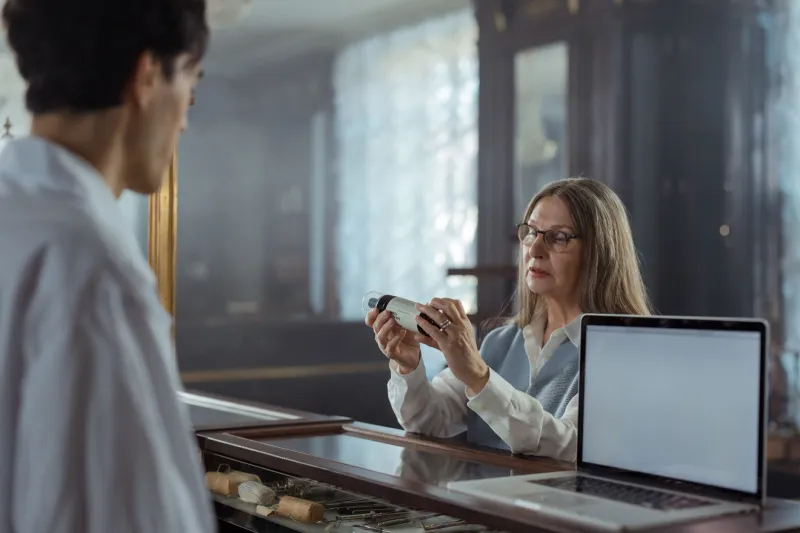
When most Americans think of their local pharmacy, they picture a busy counter, a short wait, and a brief exchange with a staff member who hands over a paper bag with a stapled receipt. The interaction is transactional by design. What many do not realize is that in much of Europe, the same visit unfolds quite differently — and the distinction begins long before a pharmacist ever steps behind a counter.
A Different Foundation: What European Pharmacy Programs Actually Teach
In the United States, the standard path to becoming a licensed pharmacist requires a Doctor of Pharmacy (Pharm.D.) degree, typically a four-year postgraduate program preceded by two years of undergraduate prerequisites. While this is a substantial academic commitment, the curriculum is heavily oriented toward medication dispensing, pharmacokinetics, and institutional practice.
In contrast, pharmacy education across European Union member states is structured around a five-to-six-year integrated master's program that blends pharmaceutical sciences with direct clinical medicine from the very first year. Students in countries such as Germany, France, the Netherlands, and Italy are exposed to patient-facing clinical rotations far earlier in their training. They study pathophysiology alongside pharmacology, learning not merely what a drug does in isolation, but how it behaves within the full context of a patient's health history, comorbidities, and concurrent treatments.
This integration is not incidental. The European Directive 2005/36/EC on the recognition of professional qualifications sets minimum educational standards that explicitly require pharmacy graduates to demonstrate competency in patient counseling, pharmacovigilance, and clinical decision-making. The result is a professional who enters practice already accustomed to thinking diagnostically, not just dispensing mechanically.
The Technician Problem: A Structural Gap in American Pharmacy Practice
To understand why this matters for American patients, it helps to examine a structural reality of US pharmacy practice that often goes unacknowledged: a significant proportion of the tasks performed at the pharmacy counter — including prescription verification, label processing, and even initial patient interaction — are handled not by licensed pharmacists, but by pharmacy technicians.
Pharmacy technicians in the United States typically complete a one-year certificate program or receive on-the-job training. While dedicated and often highly competent within their defined scope, they are not equipped by training to evaluate drug-drug interactions, assess contraindications against a patient's full medical history, or provide nuanced counseling on complex chronic disease management.
The volume pressure on American pharmacies compounds this issue. A single pharmacist at a major retail chain may oversee the dispensing of hundreds of prescriptions per shift, leaving minimal time for the kind of deliberate, individualized consultation that can catch a dangerous combination before it reaches a patient's medicine cabinet.
The consequences are not theoretical. Studies published in journals including the American Journal of Health-System Pharmacy have documented that adverse drug events — many of which are preventable — contribute to over 125,000 deaths annually in the United States and account for approximately 10 percent of all hospital admissions. A portion of these events trace directly to the failure to identify interaction risks at the point of dispensing.
When the Difference Becomes a Lifesaver: Case Illustrations
Consider the scenario of an elderly patient managing both atrial fibrillation and osteoarthritis. She is prescribed warfarin by her cardiologist and, separately, begins taking an over-the-counter ibuprofen regimen for joint pain recommended by a well-meaning neighbor. In a high-volume American pharmacy environment, this combination — which carries a serious risk of gastrointestinal bleeding and potentiated anticoagulation — may go undetected if the ibuprofen is purchased off the shelf without pharmacist consultation.
In a European pharmacy context, particularly in countries such as Belgium or Portugal where pharmacists serve as the first point of healthcare contact for many citizens, the same patient would typically be counseled before any purchase. A pharmacist trained to think clinically would flag the interaction immediately, recommend an alternative analgesic, and likely communicate with the prescribing physician.
A second illustration involves medication adherence in patients with HIV. Research conducted across European clinical settings has consistently demonstrated that pharmacist-led adherence counseling — delivered by professionals trained in motivational interviewing and patient psychology alongside pharmacology — produces significantly better long-term adherence rates than standard dispensing models. The difference is not in the medication; it is entirely in the quality of the human interaction surrounding it.
Multilingual Expertise as a Multiplier
For American patients who order medications through EuFarmacie Online, the clinical depth of our pharmacist team represents one of the platform's most substantive advantages. Our team of licensed European pharmacists brings both the rigorous clinical training described above and the ability to communicate across multiple languages — an asset that extends well beyond convenience.
Language barriers in healthcare are a recognized contributor to medication errors and poor adherence. For the approximately 68 million Americans who speak a language other than English at home, receiving detailed medication guidance in one's primary language is not a luxury — it is a safety consideration. Our multilingual pharmacists are equipped to conduct thorough medication reviews, explain complex dosing schedules, and address questions about drug interactions in the language that is most comfortable and clear for each patient.
This is not a call-center model. When you consult with a pharmacist through EuFarmacie Online, you are engaging with a clinically trained professional who has been educated to function as a healthcare partner, not merely a fulfillment agent.
What This Means for How You Manage Your Health
The gap between pharmacy models is not a criticism of American pharmacists as individuals — many are exceptional clinicians who navigate genuinely difficult systemic constraints. It is, rather, an honest accounting of what structural and educational differences produce in practice.
For patients managing multiple chronic conditions, those taking medications with narrow therapeutic windows, or individuals who have simply never had a pharmacist take the time to review their full medication list, the European-trained pharmacist model offers something that is difficult to replicate in the current US retail pharmacy environment: time, depth, and genuine clinical engagement.
At EuFarmacie Online, we have built our service model around the principle that dispensing a medication and caring for a patient are not the same act. The former is a transaction; the latter is a responsibility. European pharmacy education has, for decades, proceeded from that understanding — and the patient outcomes data suggests it has been right to do so.
If you have questions about your current medications, potential interactions, or how to optimize your treatment regimen, our pharmacist team is available for consultation. European pharmacy excellence is not a geographic privilege. Through EuFarmacie Online, it is available to you.