The Thirty-Day Trap: How America's Refill Treadmill Undermines the Medications It Prescribes
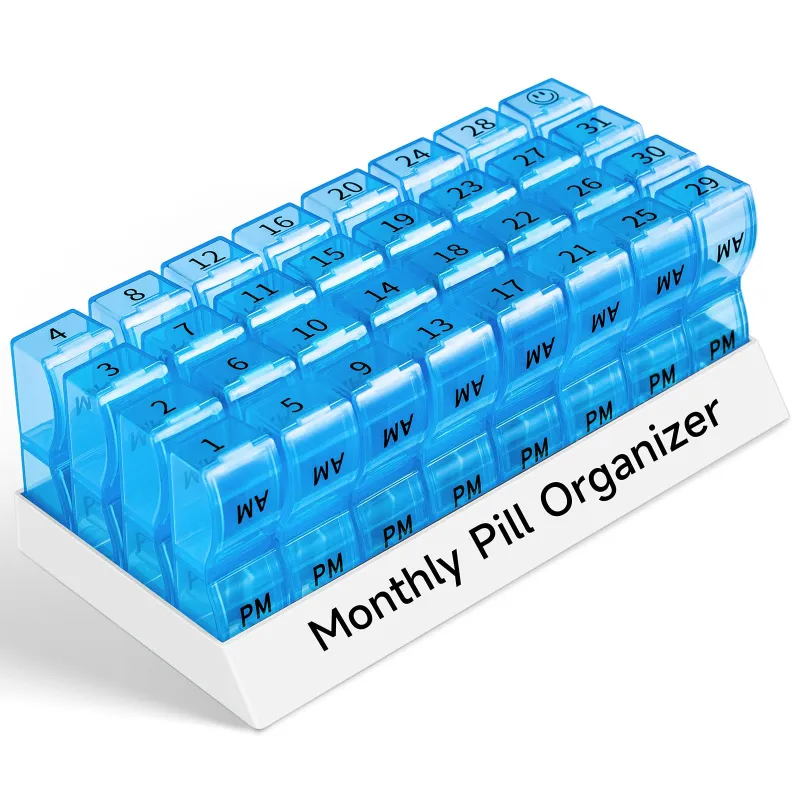
Photo: organized pill organizer with monthly medication supply on home counter, via www.gosupps.com
Here is an uncomfortable arithmetic exercise. A patient managing a chronic condition — hypertension, diabetes, high cholesterol — fills a 30-day prescription twelve times a year. Each fill requires a refill request, a pharmacy visit or delivery wait, a copayment, and often an insurance reauthorization. Over a decade, that patient has navigated the refill machinery 120 times. Miss any of those appointments with the pharmacy counter, and the missed doses begin.
We talk constantly about medication prices in America, and rightly so. But price is only half the adherence problem. The other half is friction — and the 30-day prescription is friction by design.
A System That Manufactures Gaps
The evidence on adherence is bleak and well-documented: roughly half of patients with chronic conditions in the United States do not take medications as prescribed. Studies of refill patterns consistently show that gaps cluster around refill dates — the days between a prescription running out and the patient actually getting to the pharmacy. Each monthly cycle is a fresh opportunity for a missed dose, a lapsed refill, a transportation problem, a snowstorm.
The 30-day supply persists not because it is clinically superior but because it is administratively convenient for insurers and, historically, for pharmacy reimbursement structures. It maximizes touchpoints — copays, authorizations, dispensing fees — while the clinical cost is borne quietly by patients whose blood pressure creeps up between fills.
What Europe Does Differently
Across much of the European Union, dispensing norms run on a longer horizon. Many countries dispense chronic medications in 90-day or even multi-month quantities, and the pharmacy's role is integrated with prescribing in ways that reduce patient burden rather than multiply it. Repeat dispensing schemes in the UK, coordinated chronic-care supply in the Netherlands and the Nordics — these systems treat the refill not as a monthly transaction but as an ongoing care relationship.
The result is fewer pharmacy trips, fewer decision points where a patient can fall off the wagon, and fewer days without medication. When the supply in your cabinet covers a full season, the cost of a busy week, a vacation, or a bout of flu drops to zero.
The Case for a Longer-Horizon Mindset
American patients cannot unilaterally redesign insurance reimbursement. But they can change their own refill horizon, and the data suggests they should. Extended-day supplies — 90 days where coverage permits — are associated with measurably better adherence across chronic conditions. Mail-order and integrated pharmacy channels often support longer fills at lower per-day cost.
And for patients whose coverage restricts them to 30-day cycles domestically, licensed international channels offer a legal avenue to longer-horizon supply. EU-licensed pharmacies routinely dispense 90-day quantities against a valid prescription, under the same pharmacist review and regulatory oversight that governs European domestic dispensing. For the American patient willing to do the paperwork, the refill treadmill can be replaced with a quarterly rhythm.
Adherence Is a Design Problem
The deepest lesson from European practice is this: adherence is not primarily a willpower problem. It is a design problem. Systems that require twelve perfect decisions a year will outperform those that require four, every time. Systems that put a three-month buffer between the patient and the pharmacy counter will outperform those that put a thirty-day fuse under every treatment.
Patients managing chronic disease should ask for 90-day prescriptions from their prescribers, ask their insurers about extended supplies, and where domestic channels fall short, evaluate licensed European pharmacies as a complement — not a workaround, but a rational response to a system that has optimized the refill cycle for everyone except the patient.
The medications work when patients take them. The job of a good system — and a good pharmacy — is to make taking them the easy thing to do.