Crossing the Atlantic Legally: What American Patients Can Actually Do to Access European Medications
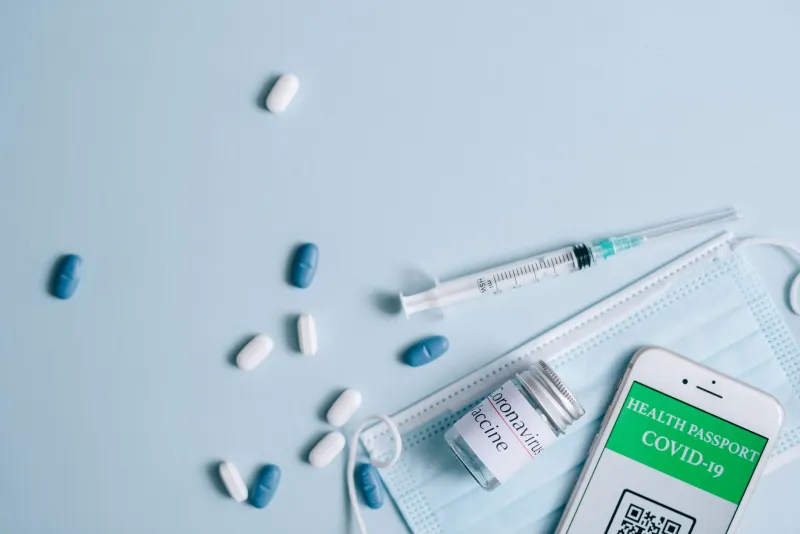
For most Americans, the idea of obtaining medication from a European pharmacy sounds either impossibly complicated or vaguely illicit. Neither impression is accurate. A growing number of US patients are discovering that accessing licensed European pharmaceutical services is not only possible but, under specific and well-documented conditions, entirely consistent with existing federal guidelines. The pathway is narrow, the rules are real, and the process demands careful attention — but it exists, and thousands of Americans are already using it.
This article does not traffic in shortcuts or loopholes. What follows is a factual examination of the regulatory framework governing personal medication importation into the United States, the enforcement priorities that shape how that framework operates in practice, and the experiences of patients who have engaged European pharmacy services directly.
What Federal Law Actually Permits
The Food, Drug, and Cosmetic Act generally prohibits the importation of unapproved foreign drugs into the United States. This is the headline most people hear. What receives far less attention is the administrative policy that sits alongside it.
The FDA's Personal Importation Policy — a guidance document rather than a statutory rule — outlines circumstances under which agency personnel may exercise enforcement discretion and decline to act against individual patients importing medications for personal use. The conditions are specific: the medication must be for a serious condition for which effective treatment may not be available domestically; the quantity must be a personal supply not exceeding approximately three months; the patient must not be promoting the drug to others; and the product must not represent an unreasonable risk.
This is not a blanket authorization. It is a documented tolerance policy, and the distinction matters. FDA enforcement resources are finite, and the agency has consistently prioritized commercial importation operations — large-scale distributors, counterfeit networks, and unlicensed suppliers — over individual patients seeking personal supplies from regulated sources.
Import compliance specialists note that the FDA's published enforcement data reflects this priority structure. Seizure records and warning letter archives skew heavily toward commercial actors, not individual patients carrying a ninety-day supply of a medication licensed and regulated in the European Union.
The European Regulatory Advantage
For Americans considering this pathway, the source of the medication matters enormously. A licensed European pharmacy operating under the oversight of the European Medicines Agency and the regulatory authorities of individual EU member states represents a fundamentally different risk profile than an unverified online vendor.
The EMA's centralized approval process subjects medications to rigorous efficacy and safety review before they reach pharmacy shelves anywhere in the European Union. Manufacturing facilities are inspected under Good Manufacturing Practice standards that align closely with — and in some respects exceed — FDA benchmarks. Dispensing pharmacies are licensed, audited, and subject to ongoing professional oversight.
This regulatory infrastructure is precisely why the FDA's personal importation guidance places meaningful weight on whether a product poses an "unreasonable risk." A medication dispensed by a licensed EU pharmacy, manufactured in an EMA-compliant facility, and prescribed by a qualified European physician does not occupy the same risk category as a counterfeit tablet purchased from an anonymous website.
At EuFarmacie Online, our operational model is built on this distinction. Every product we dispense originates from EU-licensed manufacturers, every transaction involves verified prescription documentation, and our multilingual pharmacist team is available to walk patients through both the clinical and procedural dimensions of their orders.
What the Documentation Trail Looks Like
Patients who have successfully navigated personal importation describe a process that is methodical rather than mysterious. The common elements tend to be consistent across cases.
First, they obtained a valid prescription — either from their US-based physician or, where applicable, through a licensed European telemedicine consultation. Second, they placed their order through a verifiably licensed European pharmacy, retaining confirmation records, dispensing documentation, and shipping manifests. Third, they ordered quantities within the personal-use threshold, typically a ninety-day supply or less. Fourth, when packages were flagged at customs — which does not always occur — they were prepared to provide documentation demonstrating the personal-use nature of the shipment.
In the majority of documented cases involving licensed European sources and properly sized personal supplies, packages clear customs without incident. When customs inquiries do arise, patients who can produce clear documentation — a valid prescription, a licensed pharmacy receipt, and a written statement of personal use — report favorable outcomes at a notably higher rate than those who cannot.
This is not a guarantee. It is a pattern that emerges from the intersection of regulatory policy, enforcement priorities, and the demonstrated safety record of EU-regulated pharmaceutical products.
The Medications Americans Are Seeking
The range of medications Americans obtain through European pharmacy channels is broader than many assume. Patients with chronic conditions — cardiovascular disease, autoimmune disorders, neurological conditions, and endocrine disorders among them — frequently report that European formulations of their existing medications are either unavailable in the United States, subject to severe supply shortages, or priced beyond what their insurance will cover.
In other cases, patients are seeking medications that are fully approved and widely prescribed in the EU but have not completed the FDA's separate approval process — a distinction that reflects commercial and administrative realities rather than meaningful differences in safety or efficacy.
The personal importation pathway does not resolve the underlying structural problems that create these access gaps. What it does is provide a documented, regulated, and legally navigable option for patients who have exhausted domestic alternatives.
Practical Considerations Before You Proceed
Anyone considering this pathway should approach it with clear-eyed realism about both its possibilities and its limits.
Consult your prescribing physician before making any changes to your medication source. Ensure that any European pharmacy you engage is verifiably licensed in its home jurisdiction — look for registration numbers, physical addresses, and pharmacist credentials that can be independently confirmed. Understand the personal-use quantity thresholds and do not exceed them. Retain complete documentation for every transaction.
Be aware that the regulatory landscape can shift. FDA guidance documents are not statutes; enforcement priorities can change with administrations, budget cycles, and policy directives. The personal importation tolerance that exists today reflects current agency priorities and should not be assumed permanent.
Finally, approach with appropriate skepticism any service that minimizes regulatory complexity, guarantees customs clearance, or encourages you to misrepresent the nature of your shipment. Legitimate European pharmacies operate transparently within the framework of their own national regulations and do not need to obscure what they are doing.
A System Worth Understanding
The gap between what the law says and what regulators enforce is not a secret — it is a documented feature of how large administrative systems allocate finite resources. For American patients navigating genuine medication access challenges, understanding that gap, and understanding how to operate responsibly within it, is a matter of practical importance.
EuFarmacie Online exists precisely at this intersection: a licensed, regulated, multilingual European pharmacy service designed to serve patients who need access to the full breadth of what European pharmaceutical excellence has to offer. We do not promise what cannot be promised. We do offer what can be delivered — verified medications, qualified pharmacists, and a transparent process built on the same regulatory rigor that defines European pharmacy practice at its best.
The passport to better pharmaceutical access is not a loophole. It is a framework. And for patients who take the time to understand it, it is very much within reach.