Same Medicine, Different Name: What American Patients Don't Know About European Generic Drugs
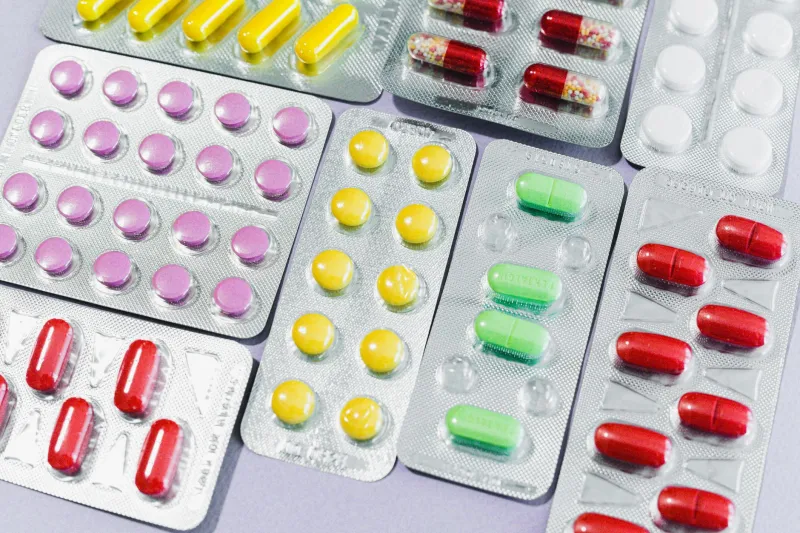
Walk into a pharmacy in Munich, Amsterdam, or Warsaw and ask for a common blood pressure medication, and the pharmacist may hand you a box bearing a name you have never encountered. The active ingredient is identical to what your American physician prescribed. The manufacturing standards are equally rigorous — in some respects, more so. And the price may be a fraction of what you pay at your local CVS or Walgreens. Welcome to the European generic drug market: a vast, well-regulated landscape that most Americans have never been invited to explore.
Why the Same Drug Carries a Different Name
The confusion begins with how pharmaceutical markets operate on either side of the Atlantic. In the United States, a drug manufacturer typically develops a compound, patents it under a brand name, and enjoys market exclusivity for a set period. When that patent expires, other manufacturers may produce generic versions — but the brand name itself remains the property of the originator company.
In Europe, the same originator patent applies, but the subsequent generic ecosystem developed independently. European manufacturers launched their own generic products under distinct proprietary trade names, often reflecting regional language preferences, local marketing strategies, or the name of the manufacturing company itself. A molecule known in the US primarily by one brand name may circulate across EU member states under five, ten, or even fifteen different trade names, all referencing the same active substance.
The result is a disconnect that leaves American patients bewildered when they encounter European packaging. The drug is not unfamiliar — only its label is.
The Role of the European Medicines Agency
Before any concern arises about the safety of these differently named products, it is worth understanding the regulatory authority that governs them. The European Medicines Agency (EMA), headquartered in Amsterdam, oversees the scientific evaluation of medicines across all EU member states. Its approval standards for generic drugs require manufacturers to demonstrate bioequivalence — meaning the generic version delivers the same active ingredient at the same concentration, with the same rate of absorption, as the reference product.
This is not a lenient standard. Bioequivalence testing conducted under EMA guidelines is substantively comparable to the requirements imposed by the US Food and Drug Administration. Patients who assume that a European generic is somehow less validated than an American one are operating on a misconception. Both regulatory bodies demand proof that the generic performs as the original did — the paperwork simply bears different letterheads.
Conditions Where the Generic Gap Matters Most
For American patients managing chronic conditions, the practical consequences of this generic gap can be financially significant. Consider a few illustrative examples.
Certain cardiovascular medications, widely prescribed for heart failure and hypertension, remain expensive in the US market because their patent situations or limited generic competition keep prices elevated. In European markets, multiple manufacturers have been producing off-patent versions of the same molecules for years, driving prices down through competition. A patient paying hundreds of dollars monthly in the United States might access a therapeutically equivalent product through a licensed European pharmacy at a considerably lower cost.
Similarly, some neurological and psychiatric medications — including certain antiepileptics and mood stabilizers — are available in generic form across the EU under trade names that American patients would not recognize from their insurance formularies. The active compounds are not exotic; they are simply marketed differently.
Dermatological treatments represent another category where the European generic market offers options that American patients may not know to request. Topical formulations for conditions ranging from psoriasis to rosacea have been available in European generics for years, sometimes with delivery mechanisms or concentration options not commonly stocked by US retail pharmacies.
Navigating International Nonproprietary Names
The key to unlocking this landscape lies in a concept called the International Nonproprietary Name, or INN. Every pharmaceutical compound is assigned a single, universally recognized INN by the World Health Organization. This is the scientific name of the active ingredient — stripped of all branding, regional variation, and marketing language.
When an American patient learns to identify their medication by its INN rather than its trade name, the European generic market becomes navigable. A product whose brand name is unfamiliar may carry an INN that matches precisely what a US physician prescribed. At EuFarmacie Online, our multilingual pharmacists are trained to cross-reference INNs across regulatory databases, helping patients confirm equivalence before any purchase decision is made.
This approach also protects patients. Verifying that a European generic shares the correct INN with a prescribed American brand name is an essential safety step — one that licensed, professionally staffed European pharmacies are well positioned to assist with.
What Licensed European Pharmacies Bring to the Process
The distinction between a licensed European pharmacy and an unverified online vendor cannot be overstated. Legitimate operations like EuFarmacie Online source medications exclusively from manufacturers operating under EMA or national competent authority oversight. Every product in our inventory carries documented approval status, batch traceability, and labeling that complies with EU pharmaceutical law.
For American patients approaching the European generic market for the first time, this institutional accountability matters enormously. It is not sufficient to find a lower-priced product on an unfamiliar website. The value of working with a licensed European pharmacy lies precisely in the verification infrastructure behind every transaction — the regulatory compliance, the pharmacist consultation, the supply chain integrity.
Our multilingual support staff can assist English-speaking American patients in understanding product labeling, confirming active ingredient equivalence, and navigating any prescription documentation requirements that apply to specific therapeutic categories.
A More Informed Patient Is a Better-Served Patient
The generic gap between European and American pharmaceutical markets is not a flaw in either system. It is a natural consequence of two large, independently developed regulatory environments operating in parallel. What it does create, however, is an information asymmetry — one that consistently disadvantages American patients who have never been shown the full picture.
Knowing that your medication exists under a different name on another continent, that it has been manufactured to equivalent safety standards, and that it may be accessible through a licensed international pharmacy is not a radical piece of knowledge. It is simply the kind of practical pharmaceutical literacy that every patient deserves.
At EuFarmacie Online, we believe that access to accurate information is the foundation of every responsible healthcare decision. Whether you are managing a chronic condition, navigating a gap in your insurance coverage, or simply seeking a more cost-effective path to the same therapeutic outcome, understanding the European generic landscape may be one of the most useful steps you take this year.